Working from home? What you can claim if you're self-employed
Two ways to claim home office costs as a sole trader, the flat rates HMRC allows, and how to choose between them.
 Iuliana Grigore · 2 min read
Checked for the 2026 to 2027 tax year · Updated
If you run your business from home, part of your household costs can come off your tax bill. There are two ways to work it out.
Option 1: the flat rate
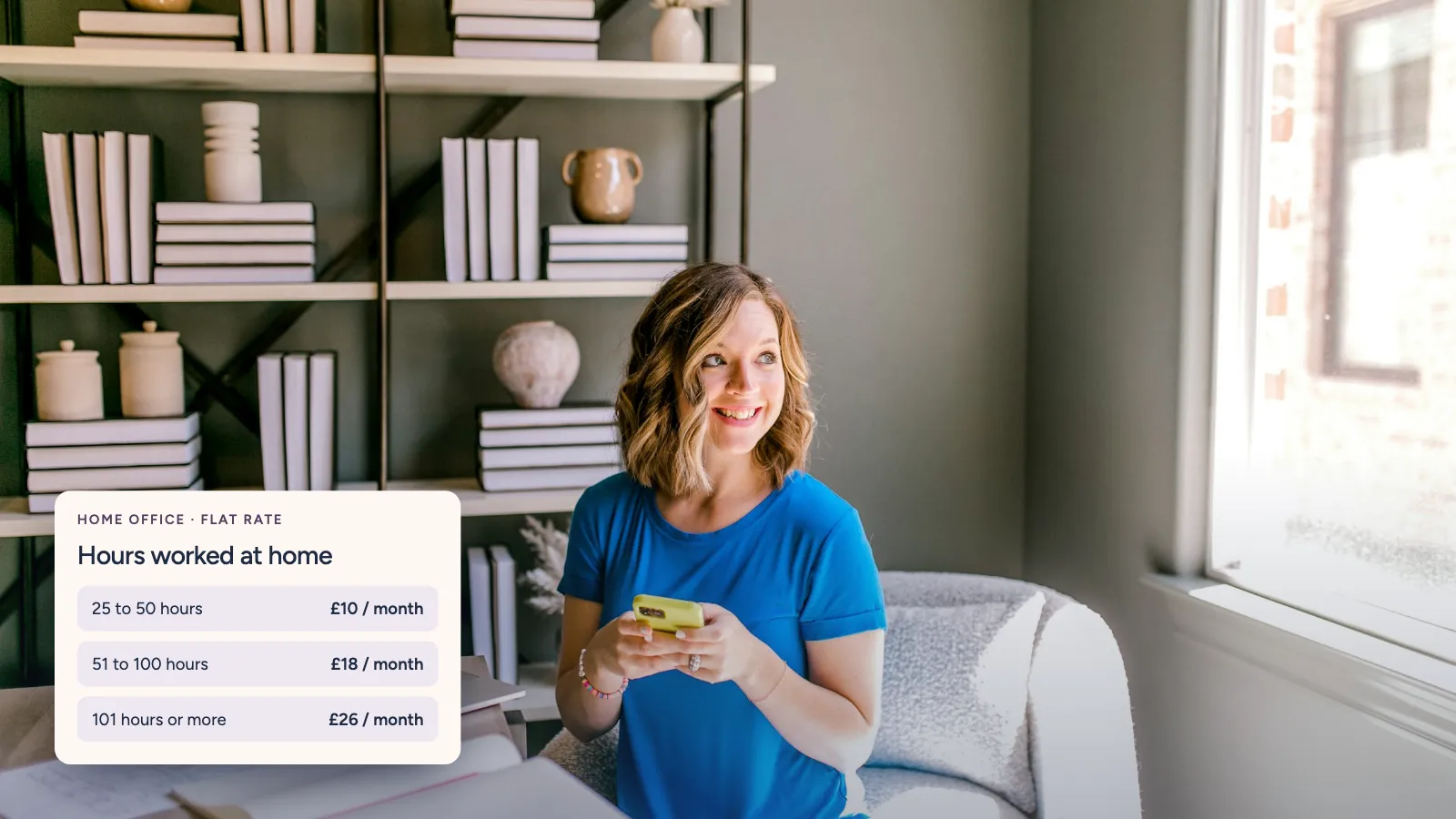
HMRC lets you claim a set monthly amount based on the hours you work at home. You don't need to keep bills, just a record of your hours.
- 25 to 50 hours a month: £10
- 51 to 100 hours a month: £18
- 101 hours or more a month: £26
The flat rate doesn't cover phone or internet. You can claim the business part of those separately.
Option 2: a share of actual costs
You can instead claim a fair share of real bills, such as heating, electricity, council tax, rent or mortgage interest. A common way is to split costs by the number of rooms you use and the time you use them for work.
This takes more record keeping, but it often gives a bigger claim if you work from home full time.
Which one should you use?
- Choose the flat rate if you want it simple, or only work from home part of the week.
- Choose actual costs if home is your main workplace and your bills are high.
Whichever you choose, keep a short note of how you worked it out, in case HMRC asks.
How I help
I'll check which method gives you the better result each year and make sure it's claimed on your return.