Payments on account: why your January tax bill can be bigger than expected
What payments on account are, why the first January bill can be one and a half times your tax, and when you can ask HMRC to reduce them.
 Iuliana Grigore · 2 min read
Checked for the 2026 to 2027 tax year · Updated
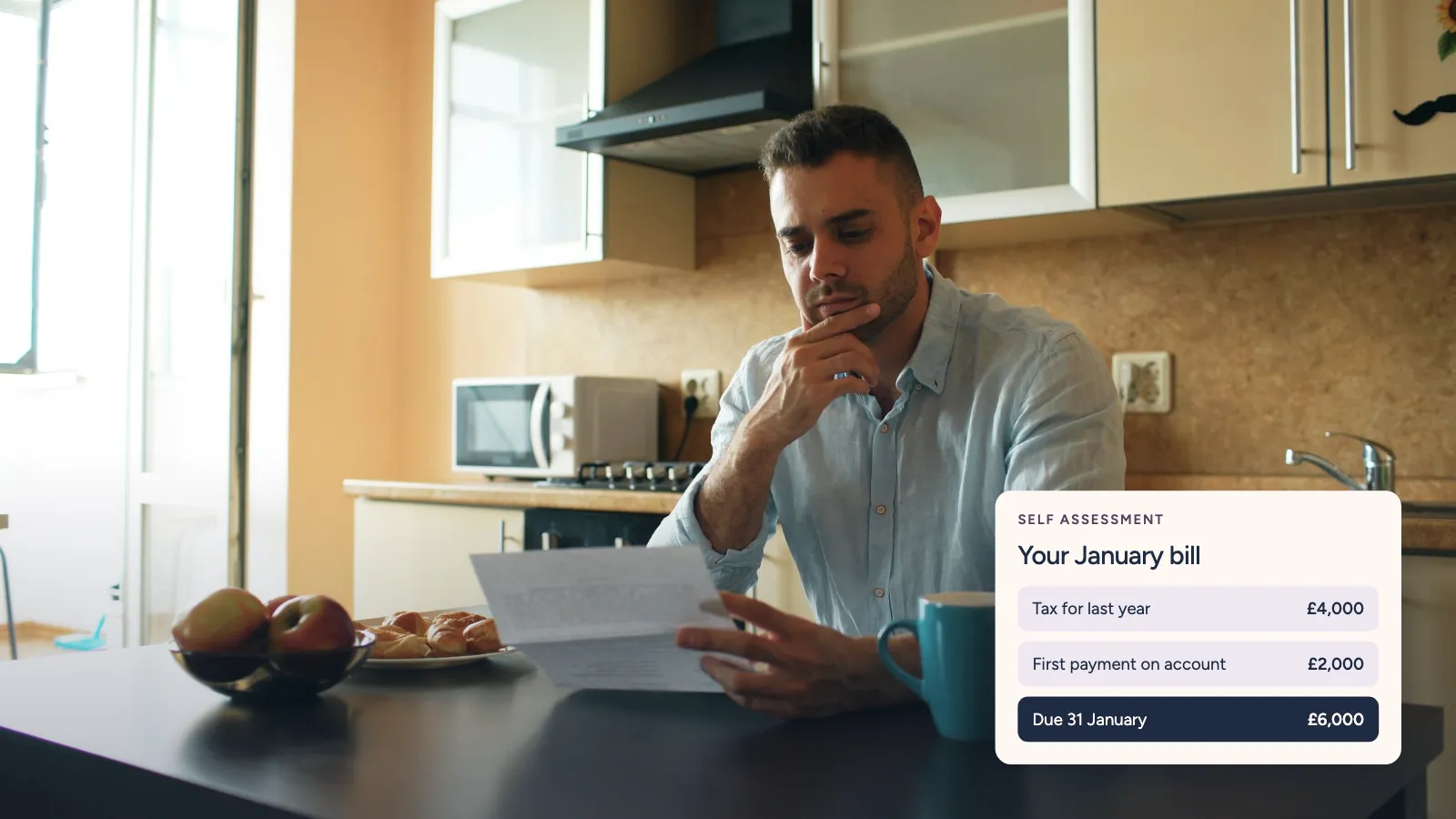
If you're self-employed, your second or third tax bill often comes as a shock. That's usually payments on account: HMRC asking you to pay part of next year's tax in advance.
What payments on account are
If your last Self Assessment bill was more than £1,000, and less than 80% of your tax was already taken through PAYE, HMRC asks for two advance payments towards the current year:
- 31 January, half of last year's bill
- 31 July, the other half
Each one is based on last year's tax and Class 4 National Insurance. Student loan repayments and Capital Gains Tax aren't included.
Why the first January bill is so big
The first time it happens, 31 January brings two things at once: the full bill for last year, plus the first payment on account for this year.
Say your 2025 to 2026 tax comes to £4,000. On 31 January 2027 you pay that £4,000 plus a £2,000 payment on account: £6,000 in one go. Another £2,000 follows on 31 July.
After that first year it usually evens out, because the payments you've made in advance count towards each new bill.
When the payments are too high
If your income has dropped, you can ask HMRC to reduce your payments on account, online or on form SA303. Be realistic: if you reduce them by too much, HMRC charges interest on the shortfall.
If you paid too much, the extra is taken off your next bill or refunded once your return is filed.
How to plan for it
- Put aside a share of every payment you receive, so January isn't a scramble.
- File early. You'll know your bill months before it's due.
- Check every date on the key tax dates list, including both payment on account deadlines.
How I help
I work out your bill well before 31 January, tell you exactly what's due and when, and check whether your payments on account can be reduced. See all the deadlines on the key tax dates page.